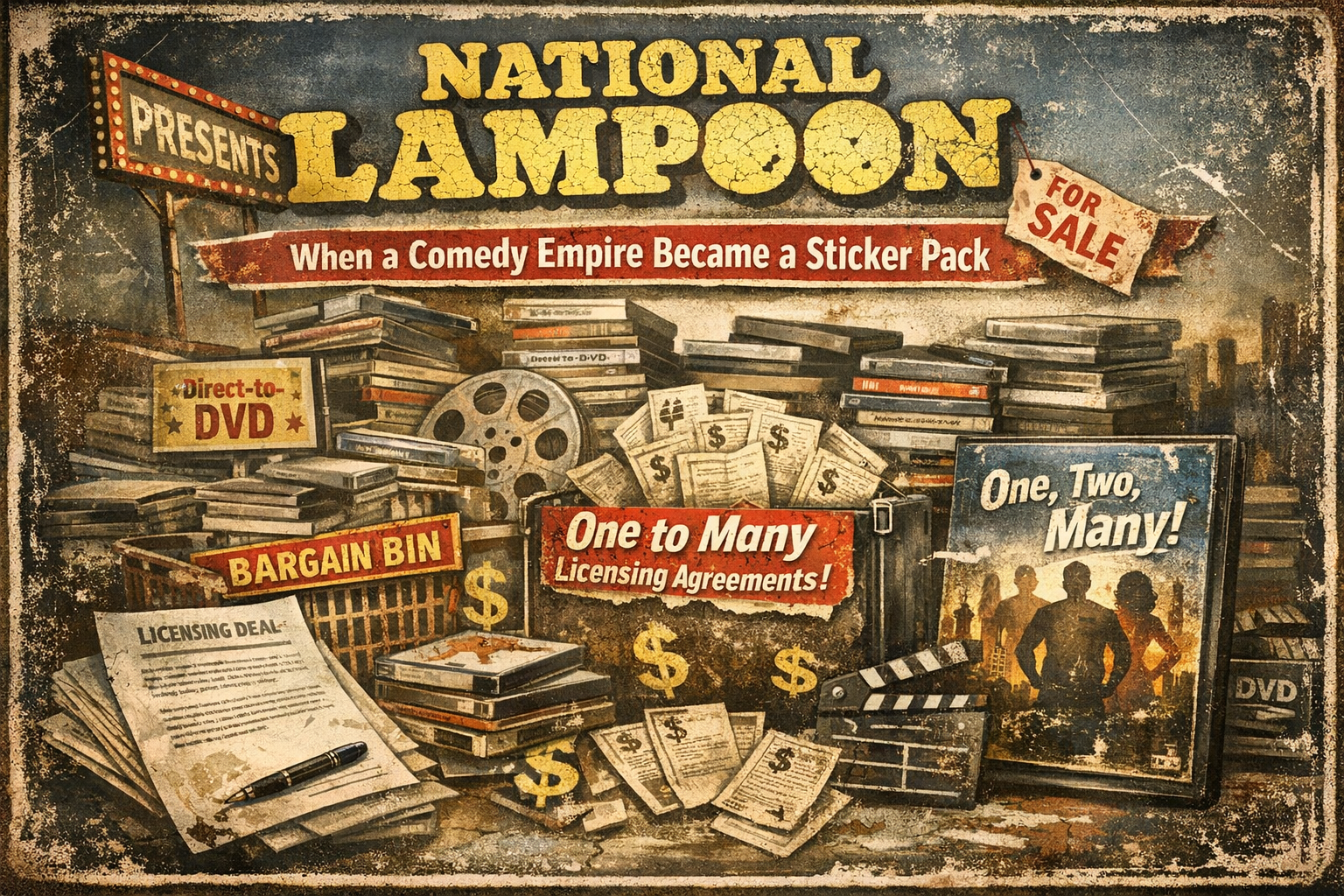
There was a time when the National Lampoon name carried real comedic weight. In the 1970s and 80s, the brand helped launch Animal House, Vacation, and an entire generation of American comedy. But by the mid‑2000s, the once‑mighty Lampoon empire had drifted far from its creative roots and into a new business model entirely: renting out its logo to low‑budget films in need of instant legitimacy.
This period—politely referred to by archivists as the “Presents Era”—saw the Lampoon name appear on a wave of direct‑to‑DVD curiosities that bore the crest but none of the comedic DNA. The brand wasn’t producing movies anymore. It was licensing its identity, one project at a time, to anyone with a script, a camcorder, and a checkbook that cleared.
A Brand in Decline Meets a Movie in Search of Legitimacy
Among the many titles to emerge from this licensing free‑for‑all was a film that has since achieved a kind of cult status—not for its quality, but for the sheer audacity of its existence. One, Two, Many arrived during the twilight of the Lampoon brand, a moment when the company’s involvement in a project meant little more than a logo on the DVD cover and a line item on an invoice.
Industry insiders from that era describe the arrangement bluntly: you didn’t sell your movie to National Lampoon—you paid National Lampoon to pretend they made it. It was the cinematic equivalent of wearing a college ring from a university you never graduated from: technically allowed, socially questionable, and instantly obvious to anyone who knows how the system works.
The film itself… well, let’s just say it wasn’t positioned to reverse the brand’s fortunes. Critics struggled to categorize it, landing somewhere between “experimental comedy” and “unintentional documentary about the dangers of creative freedom.” Even in a marketplace saturated with low‑budget comedies, this one stood out for its commitment to choices no studio would ever approve.
The Movie That Became a Case Study
One, Two, Many is remembered today less as a film and more as a cultural artifact—a snapshot of what happens when:
- a fading brand needs revenue
- a filmmaker needs legitimacy
- and the DVD market is still willing to take anything with a recognizable logo
The result was a project that looked, on paper, like a National Lampoon production… and looked, on screen, like something assembled during a long weekend with a borrowed camera and unlimited confidence.
The Lampoon name didn’t elevate the movie.
The movie didn’t revive the Lampoon name.
Both simply drifted downward together.
The Mythology That Followed
In the years since, some involved with the project have spoken about the Lampoon connection as though it were a traditional studio acquisition—a flattering narrative, if not an accurate one. But the truth is more interesting: One, Two, Many wasn’t a product of National Lampoon’s creative machine. It was a product of their licensing department, a relic from a time when the brand was more stamp than studio.
And that gap—between the myth and the mechanism—is where the comedy really lives.
A Footnote in Lampoon History, a Highlight in LOLcow Lore
Today, the film occupies a strange but fascinating place in internet culture. It’s a reminder of:
- how far a legendary brand can fall
- how quickly a licensing model can dilute an identity
- how a movie can become infamous without ever becoming successful
And in the Dabbleverse, it serves as a perfect example of a recurring theme: the stories people tell about their careers often say more than the careers themselves.
The Lampoon logo didn’t save the movie.
The movie didn’t save the Lampoon logo.
But together, they created one of the most unintentionally funny chapters in modern comedy history.